



Why Repeating Phone Number Patterns Are So Easy to Remember
Repeated digits are not just visually attractive. They reduce the amount of information your brain has to hold, which is exactly why they work so well in advertising.
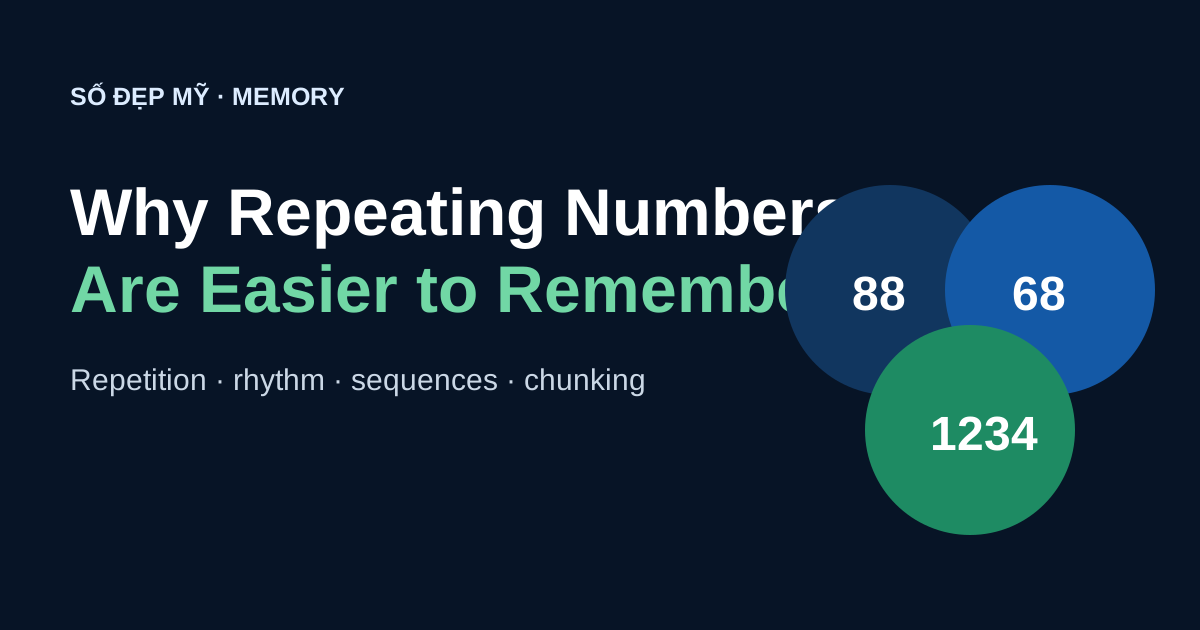
In this guide
Your brain remembers chunks, not ten separate digitsRepetition removes uncertaintyRhythm matters when a number is spokenStrong endings usually matter more than strong middlesRepetition can create visual identityNot every repeated number is equally valuableThe best test is simpleUse pattern as a tool, not a trophyThink about the last phone number you remembered without saving it. Chances are it had a pattern.
Human memory likes structure. Repetition, rhythm and sequence allow us to compress information into smaller chunks. That is why a phone number ending in 8888 is easier to recall than four unrelated digits.
Your brain remembers chunks, not ten separate digits
A U.S. phone number contains ten digits, but people rarely memorize all ten as independent pieces. We naturally group them into an area code, a three-digit exchange and a four-digit ending.
A strong pattern makes that last chunk even easier. Instead of remembering “8-8-8-8,” the brain stores “four eights.” Instead of remembering “6-8-6-8,” it stores a simple alternating rhythm.
This process is sometimes called chunking. You do not need to study psychology to use it. You can hear it immediately when one number feels easier than another.
Repetition removes uncertainty
The more predictable the next digit becomes, the less work memory has to do.
Consider these endings:
- 5827
- 6868
- 8888
- 1234
All contain four digits, but they do not require the same amount of mental effort. The first has no obvious rule. The other three do.
Rhythm matters when a number is spoken
A phone number is not only visual. Customers hear numbers in conversation, on voicemail, in videos and over the radio.
Patterns with a clear rhythm survive speech better. “Six-eight, six-eight” is easier to repeat than an irregular four-digit string. The same is true for paired digits, repeated pairs and ascending sequences.
If a business uses audio advertising, speaking rhythm becomes even more important.
Strong endings usually matter more than strong middles
Customers often remember the final four digits because that is the last thing they hear. That makes a memorable ending especially valuable.
A beautiful pattern in the middle can still help, but an ending such as 8888, 9999, 6868 or 1234 is easier to use in advertising copy: “Call us at ... 8888.”
Repetition can create visual identity
On a sign, truck, business card or social profile, repeated digits create shape. They are easy to scan and easy to spot again later.
That visual consistency is one reason businesses like memorable phone numbers. The number becomes part of the brand rather than just contact information.
Not every repeated number is equally valuable
Context still matters. A pattern can be memorable but located in an area code that does not fit the business. Or the number can have a great ending but an awkward overall rhythm.
Evaluate the full number, not just the last four digits.
The best test is simple
Show the number to someone for five seconds. Hide it. Ask them to repeat it a minute later.
Then say it aloud once and ask them to type it.
A number that passes both tests has genuine memorability, not just visual novelty.
Use pattern as a tool, not a trophy
The point of a memorable number is to make communication easier. A business does not need the rarest possible number. It needs a number customers remember.
That is why a clean repeating or rhythmic pattern can be a practical marketing asset even when it is not an ultra-rare collector number.
Browse VIP numbers or search by digits in the current phone-number inventory to see how different patterns feel in real numbers.
Frequently asked questions
Why is 8888 easier to remember than random digits?
Repetition lets the brain store the ending as one pattern instead of four unrelated pieces of information.
Are repeating endings good for business phone numbers?
Yes. They can be especially useful in signs, radio, video and word-of-mouth because customers can hear and repeat them more easily.
Is the last four digits the most important part?
Often, yes. The ending is the final chunk people hear and is easy to feature in advertising, although area code and overall rhythm still matter.
Find a phone number that is easier to remember
Search current U.S. inventory by area code, digits, pattern and budget.